Transform Your Business with an Integrated ERP System
Bring your finance, sales, procurement, inventory, manufacturing, projects, and customer operations together on a single platform. OSDuo Tech helps growing businesses streamline processes, improve visibility, and make smarter decisions with ERP solutions designed for sustainable growth.
Business Challenges That Hold Back Growth
Disconnected systems, manual processes, and limited visibility can slow growth, reduce efficiency, and impact business decisions.

Disconnected Processes
Business information is spread across multiple systems, creating data silos, duplicate work, and inefficient collaboration between departments.

Limited Visibility
Without real-time insights into business operations, decision-makers struggle to monitor performance, identify issues, and respond quickly.

Manual Operations
Repetitive data entry, approvals, and paperwork consume valuable time, increase errors, and reduce overall productivity.

Inventory Challenges
Poor inventory control can result in stock shortages, excess inventory, delayed deliveries, and higher operational costs.

Team Collaboration
Departments working independently often face communication gaps, inconsistent information, and slower business processes.

Scaling Difficulties
As your business grows, disconnected applications and manual workflows become difficult to manage and limit future expansion.
What is an ERP System?
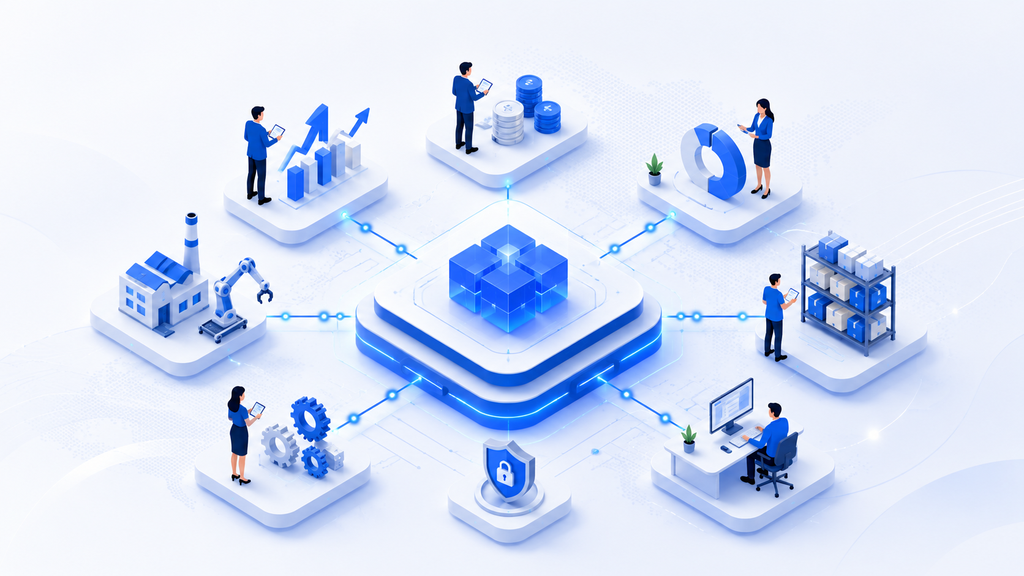
An Enterprise Resource Planning (ERP) system is an integrated business management platform that brings together your organization's core operations into one unified system. Instead of managing finance, sales, procurement, inventory, manufacturing, and other functions through separate applications or spreadsheets, an ERP system centralizes information and automates business processes. By creating a single source of truth, an ERP system enables teams to work with accurate, real-time information across departments. This improves collaboration, reduces manual effort, eliminates duplicate data, and provides greater visibility into day-to-day operations. As your business grows, an ERP system helps standardize workflows, streamline operations, and support informed decision-making. Whether you're managing a single office or multiple business locations, it provides the flexibility and scalability needed to adapt to changing business requirements.
Unlock the Benefits of an Integrated ERP System
Integrate your business, improve operational efficiency, and gain the visibility needed to make decisions and support sustainable growth.
Operational Efficiency
Automate repetitive tasks, standardize workflows, and reduce manual effort to improve productivity across every department.

Real-Time Insights
Access accurate business information through live dashboards and reports, enabling faster decisions based on real-time data.

Connected Teams
Bring departments together on a unified platform where information flows seamlessly, improving collaboration and accountability.

Smarter Decisions
Leverage centralized business data and analytics to identify trends, monitor performance, and make informed strategic decisions.
Business Scalability
Support business growth with a flexible platform that adapts to expanding operations, locations, products, and users.

Enhanced Customer Experience
Improve responsiveness, service quality, and order fulfillment by connecting customer-facing operations with back-office processes.
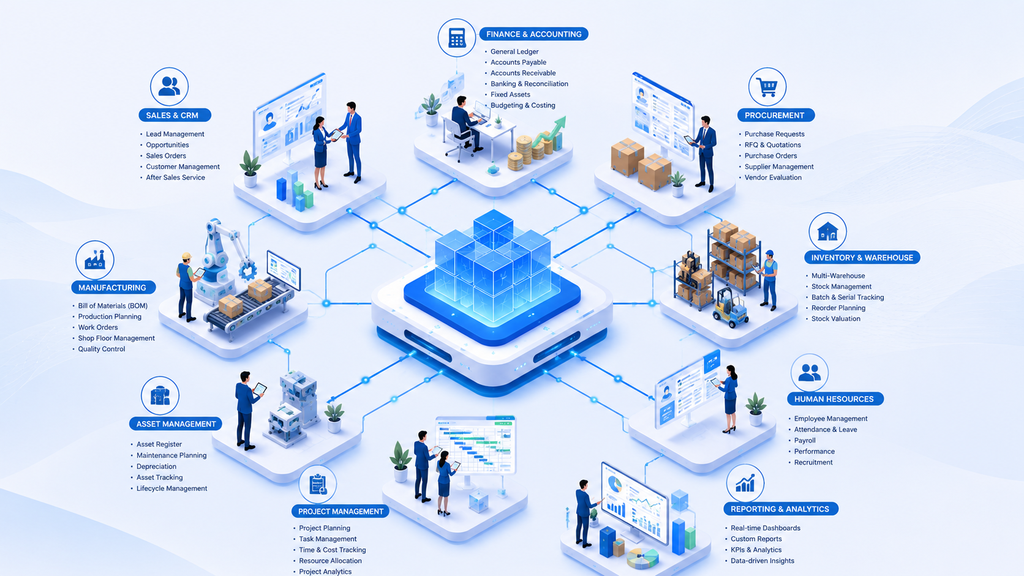
Comprehensive Business Capabilities
Manage every stage of your business through a single integrated platform designed to improve efficiency, visibility, and control.
Business Use Cases
See how an ERP system streamlines operations across departments and supports efficient, data-driven business management.
Why Your Business Needs an ERP
An ERP system connects your people, processes and information creating a strong foundation for operational excellence and sustainable growth

Connected Business Operations
Eliminate disconnected systems by bringing finance, sales, purchasing, inventory, manufacturing, and human resources together on a single platform.
Complete Business Visibility
Access real-time operational and financial information that enables informed decision-making, proactive planning, and better organizational control.
Standardized Processes
Create consistent business workflows that reduce manual effort, improve collaboration, and ensure every department follows the same operational standards.

Improved Governance
Strengthen compliance through standardized approvals, audit trails, role-based access controls, and accurate business records across the organization.
Scalable Business Growth
Build a business platform that supports expansion into new products, locations, teams, and markets without increasing operational complexity.

Digital Transformation Ready
Establish a digital foundation that enables automation, business intelligence, collaboration, and future technology adoption as your organization evolves.
Our ERP Implementation Approach
A proven implementation methodology that ensures a smooth transition, user adoption, and long-term business success.

Discover & Analyze
We assess your business processes, operational challenges, and goals to define a clear ERP implementation strategy.

Plan & Design
We design the solution, map business workflows, define configurations, and prepare a structured implementation plan.

Configure & Integrate
We configure the ERP system, migrate data, and integrate the applications essential to your business operations.
Test & Validate
We conduct comprehensive testing, validate business processes, and ensure the solution is ready for production.
Deploy & Train
We deploy the solution, train your teams, and provide guidance to ensure a successful go-live.

Support & Optimize
We continue supporting your business with enhancements, optimization, monitoring, and continuous improvements.
Frequently Asked Questions
Find answers to common questions about ERP solutions, implementation, deployment, and ongoing support.
An Enterprise Resource Planning (ERP) system integrates core business functions such as finance, sales, procurement, inventory, manufacturing, and human resources into a single platform.
Instead of managing multiple disconnected applications, an ERP enables information to flow seamlessly across departments, providing real-time visibility, standardized processes, and better business decisions.
Yes. Modern ERP solutions are designed to support businesses of all sizes.
You can start with the modules your business needs today and expand the solution as your organization grows. This flexible approach allows your technology to scale alongside your business without replacing existing systems.
Implementation timelines depend on factors such as business size, operational complexity, number of users, required modules, integrations, data migration, and customization requirements.
After understanding your business needs, OSDuo Tech prepares a structured implementation roadmap with clearly defined phases, milestones, and realistic timelines.
Yes. ERP solutions can integrate with CRM platforms, collaboration tools, websites, eCommerce platforms, payment gateways, and other third-party applications.
This creates a connected digital ecosystem where information flows seamlessly across your business operations.
Absolutely.
Our services include end-user training, administrator training, deployment assistance, go-live support, ongoing technical support, system optimization, and continuous improvements to help your team maximize the value of your ERP investment.
Yes.
We configure and customize workflows, approvals, dashboards, reports, forms, and business processes to align the ERP solution with your operational requirements while following best practices for maintainability and future upgrades.
Yes.
Depending on your security, compliance, and infrastructure requirements, the ERP solution can be deployed on cloud infrastructure, on-premises servers, or in a hybrid environment.
We'll help you choose the deployment model that best fits your business.
Getting started is simple.
Schedule an initial consultation with our team to discuss your business goals, operational challenges, and existing processes. Based on this assessment, we'll recommend the right ERP solution and prepare an implementation roadmap tailored to your business.
Ready to Transform Your Business with the Right ERP Solution?
Whether you're implementing your first ERP system, replacing legacy software, or expanding your existing business operations, OSDuo Tech is here to help. Our consultants work closely with you to understand your goals, recommend the right solution, and deliver a successful implementation that supports your long-term growth.